
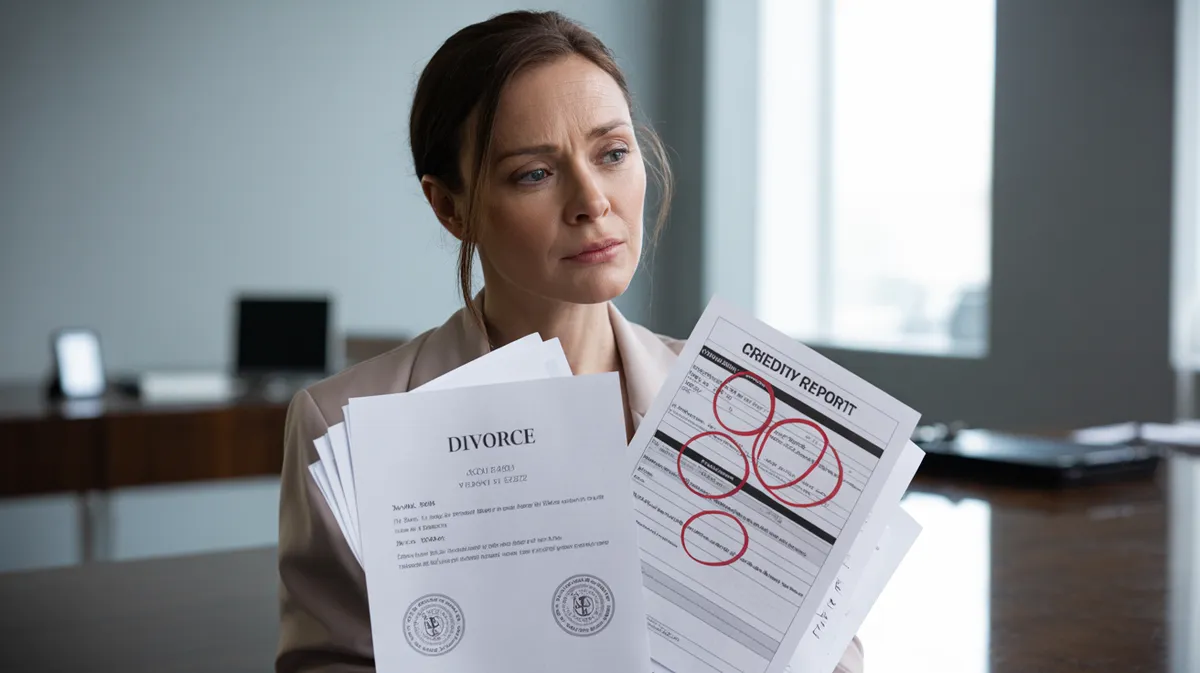
You did everything right. You negotiated the divorce decree. The judge signed it. Your ex-spouse agreed to pay the joint Visa, the car loan, and the Target card. You moved on. And then you applied for an apartment -- or a car loan, or a mortgage -- and discovered your credit score had dropped sharply.
Your ex did not pay. And the creditor reported the delinquency against you. If the same joint debts have also become impossible to manage, our article on bankruptcy vs. divorce debt explains when Chapter 7 may be part of the answer.
This is one of the most devastating financial consequences of divorce, and most people do not see it coming until the damage is already done. The good news is that federal law may give you a path to fight back through FCRA credit-reporting claims -- and it will not cost you anything.
Why This Happens
When you and your spouse opened a joint credit card or co-signed a loan during the marriage, you both became contractually liable to the creditor. Your divorce decree can reassign responsibility between the two of you, but it cannot modify the original contract with the creditor. The creditor was not a party to your divorce and is not bound by the decree.
That is why it helps to separate the family-court order from the credit contract; our guide to what a divorce decree does and does not protect you from walks through that distinction in more detail.
So when your ex stops paying the account the decree assigned to them, the creditor reports the delinquency to the credit bureaus against both account holders. Your credit score drops -- even though you had no obligation to pay under the decree, and even though you may not have known the payments were missed.
Where the FCRA Comes In
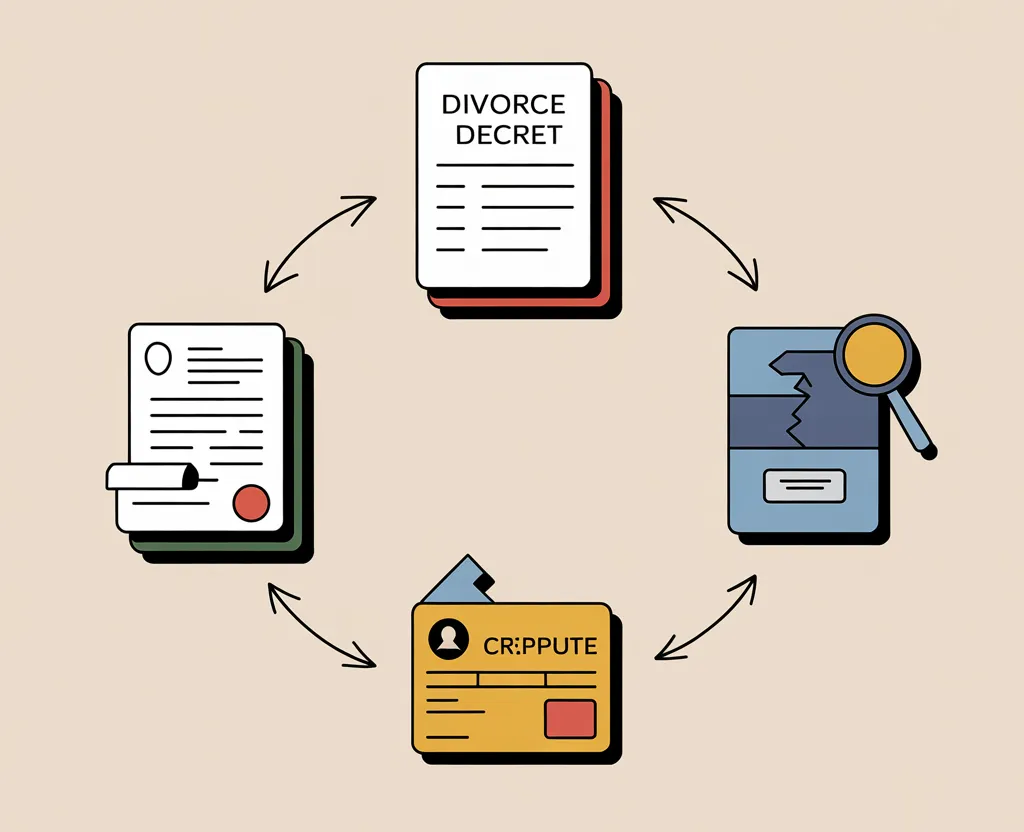
The Fair Credit Reporting Act (FCRA), codified at 15 U.S.C. § 1681 et seq., requires that information furnished to consumer reporting agencies be accurate. Under 15 U.S.C. § 1681s-2(a), a furnisher (typically the creditor or debt collector) may not furnish information that it knows or has reasonable cause to believe is inaccurate. Under 15 U.S.C. § 1681s-2(b), when a furnisher receives notice of a dispute from a consumer reporting agency, it must conduct a reasonable investigation and report the results.
The consumer reporting agencies themselves -- Equifax, Experian, and TransUnion -- have their own obligations under 15 U.S.C. § 1681i. When you dispute the accuracy of information on your report, the agency must conduct a reasonable reinvestigation within 30 days and delete or modify any information that is found to be inaccurate or unverifiable.
If you need the mechanics of the dispute itself, use our guide to disputing inaccurate credit reports before sending anything to the bureaus.
Here is where the divorce context creates FCRA exposure. If you dispute the reporting through a credit bureau and include the divorce decree, the bureau must conduct a reasonable reinvestigation under § 1681i. Once the bureau notifies the furnisher of the dispute, the furnisher's duties under § 1681s-2(b) are triggered as well.
The key legal question is whether the credit reporting is "inaccurate" within the meaning of the FCRA. Courts have wrestled with this. Some have held that because the original contract still exists, reporting a joint account as delinquent is technically accurate even after a divorce decree reassigns the debt. Others have recognized that accuracy is context-dependent and that failing to account for a judicial order allocating the debt may render the reporting misleading.
What is clear is this: when the statutory dispute process is triggered, the investigation has to be reasonable. A boilerplate "verified as reported" response that ignores the materials you submitted can support an FCRA claim, but the outcome remains fact-specific and depends on how the dispute was made and what the reporting actually said.
The Damage Is Real
A 100-point drop in your credit score is not an abstraction. It means higher interest rates on every loan you take. It means denied apartment applications. It can mean lost job opportunities, because many employers pull credit reports as part of the hiring process. In Illinois, a credit score drop can compound the financial stress of divorce in ways that affect your housing, your transportation, and your ability to provide for your children.
Under the FCRA, you can recover actual damages (including emotional distress and financial losses attributable to the inaccurate reporting). In cases of willful noncompliance, 15 U.S.C. § 1681n also allows statutory damages of $100 to $1,000, punitive damages, and attorney's fees. In cases of negligent noncompliance, actual damages and attorney's fees are available under 15 U.S.C. § 1681o.
What You Should Do
First, pull your credit reports from all three bureaus. You are entitled to free reports at AnnualCreditReport.com. Identify any accounts that were assigned to your ex in the divorce decree but are still reporting negatively against you.
Second, dispute the reporting through each credit bureau that is listing the account, and include a copy of the relevant pages of your divorce decree. You can also notify the furnisher directly, but the bureau dispute is usually what triggers the furnisher's federal investigation duties under § 1681s-2(b).
Third, document the response. If the bureau's reinvestigation is perfunctory, or if the furnisher fails to reasonably investigate after notice from the bureau, that can form the basis of an FCRA claim.
If the problem is not just credit reporting but collector contact about your former spouse's debt, our article on collection calls about an ex's debt after divorce explains when FDCPA rules may matter too.
Then contact an FCRA attorney. Like the FDCPA, the FCRA is a fee-shifting statute. Under 15 U.S.C. § 1681n and § 1681o, the violating party pays your attorney's fees. You pay nothing out of pocket. The company that broke the law pays us -- not you.
If your credit has been damaged by your ex's failure to pay debts the divorce decree assigned to them, Hyslip Legal can review whether an FCRA case evaluation makes sense.
Related Reading
This information is for educational purposes only and does not create an attorney-client relationship with Hyslip Legal, LLC. Legal outcomes depend on the facts of each case.